

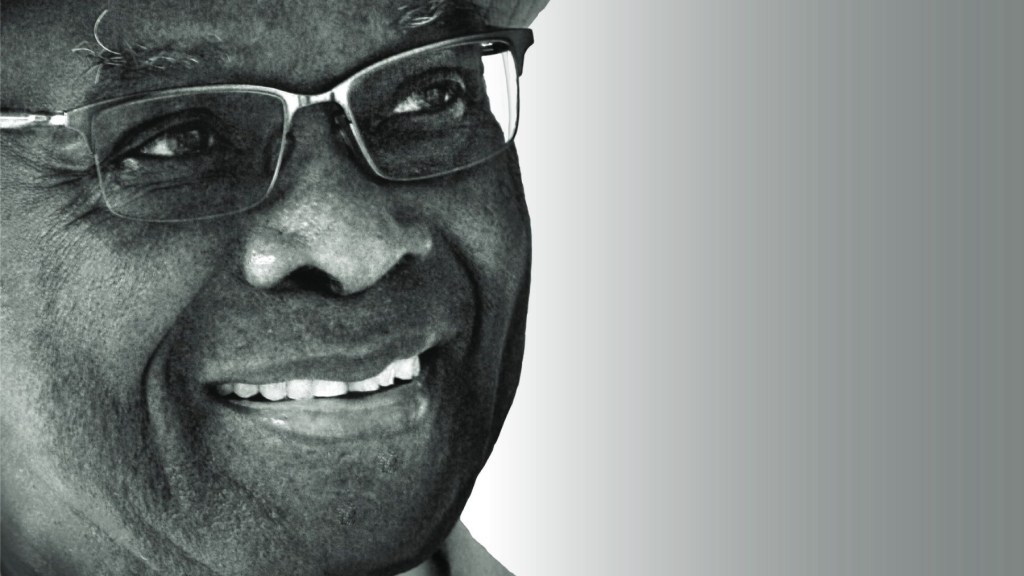
Gambia’s Lamin Sanneh (1942-2019) was indeed one of African’s finest scholars in the field of religion. Prior to his death on January 6 this year, Sanneh was the D. Willis James Professor of Missions and World Christianity at Yale Divinity School and Professor of History at Yale University. There he taught for 30 years. In The New York Timestribute, Sanneh was described as a “champion of cross-cultural exchange”, and former Archbishop of Canterbury, Rowan Williams described him as “probably the most significant theologian of mission in the English-speaking world today.” Sanneh’s major concern as a scholar was on the reality of religion in Africa; on the different layers of meaning, ‘political’ or power plays, and identity questions that attend this reality. Though he converted from Islam to Christianity, Sanneh critically wrestled with questions that challenge the very conflictual relationship between Islam and Christianity, while safeguarding what it means to be ‘African’.
In what follows I present you an excerpt from his 2003 work, Whose Religion is Christianity? The Gospel Beyond the West. Part of this work is in Q&A format and most issues addressed therein remain relevant in our context today. Enjoy!

QUESTION 14: I’d like to turn to the indigenous dimensions of world Christianity. You spoke earlier of adopting African names for God, saying that laid the basis for large-scale conversation. But I imagine much more is involved than mere statistics. What significance do you attach to African names for God and to their adoption in Christianity?
ANSWER: The name of God is basic to the structure of traditional societies. It forms and regulates agricultural rituals, territorial cults, agrarian festivals, the solar calendar, fertility ceremonies, mortuary observance, anniversary customs, units of generational measurement, naming rules, ethics, rank and status, gender relations, filial obligation, gift making, sacrificial offering, and so on. It’s therefore hard to think of viable social systems without the name of God, but easy to envision societies that have become vulnerable because they lost the name or the sense of the transcendent. (Maybe there is a lesson for a post-Christian West here.)
It follows that the adoption of African names for God in Christianity would carry corresponding implications for social and cultural renewal, with effects on indigenous ethics and historical consciousness. We may summarize the matter as follows: the name of God contained ideas of personhood, economic life, and social/cultural identity; the name of God represented the indigenous theological advantage vis-à-vis missionary initiative. In that respect African religions as conveyers of the names of God were in relevant aspects anticipations of Christianity; in the relevant cases Christian expansion and revival were limited to those societies that preserved the indigenous name for God. It suggests that theologically God had preceded the missionary in Africa, a fact that Bible translation clinched with decisive authority.
QUESTION 15: With all that granted, would you say the growth and renewal in world Christianity have been all gain and no loss?
ANSWER: No, it’s been a bit of both.
QUESTION 16: Can you say more?
ANSWER: Yes. On the gain side the churches have grown; membership has increased, in many cases exponentially; and communities of hope have come into being in areas of strife and despair. But on the loss side, false prophets have appeared, schisms have spread, the simple and ignorant have been taken advantage of, ethnic hostility has flared into grim killings, and ethical standards have slipped with political corruption. There has been structural collapse of the public order, but the dogma of secularization precludes a public role for religion even in this dire situation. Indeed, religion is held responsible for the failure.
Culled from, Lamin Sanneh, Whose Religion is Christianity? The Gospel Beyond the West (Grand Rapids: W.B. Eerdmans, 2003), 31-32.

 Alongside One Another
Beautiful Exposition. Thanks Ikenna
LikeLike
Thanks a lot Fr.
LikeLike
Thank you Fr. for sharing such profound thoughts
LikeLike
Thanks a lot Mike. Please, keep reading our blog and keep sharing
LikeLike