

“One day all these churches will close down and all of them will return to the original Church of Christ, the holy Catholic and apostolic Church. So, you guys can keep deceiving yourselves, pretending to be church,” said John Gandu.
He was just having a heated argument with his friend Precious Vareba.
Precious isn’t taking any of this from John.
And so, Precious retorted, “my brother, leave that thing. You see, you people don’t understand that Christianity is about living in the Spirit and believing in the Word of God. You only live out human traditions of religion and claim to be Christians. Don’t worry, there will no heaven for you guys. You had better come and join me!” He warns, with a measure of seriousness as well as friendliness.
Sorry guys. Sorry to disappoint you both! I think both of you are wrong. It is not true, dear John, and it will never happen that all churches come back to the Roman Catholic Church. In fact, if catholicity is a character of the church of Christ, in its universality, then every church, being the very reason of being located in all parts of the world, is catholic. All churches are in the network of catholicity. This does not remove anything from the specific claims of each church, but then these claims do not exclude any from salvation that is offered ONLY by Christ.
By that same token, Promise, you are very wrong. It is not your duty to decide who enters the kingdom of God or not. To reduce the rich Catholic heritage to rituals is to confess to the ignorance of what you have been taught about the Roman Catholic Church. In fact, the first to break away from the church in the West, Martin Luther, cannot be sufficiently understood without the theology of St. Augustine. In the same way the rich spiritual traditions of Francis of Assisi, Catherine of Siena, Theresa of Avila, John of Cross, Thomas Merton, and so on, which are still lived out today remain profound encounters with the Holy Spirit.
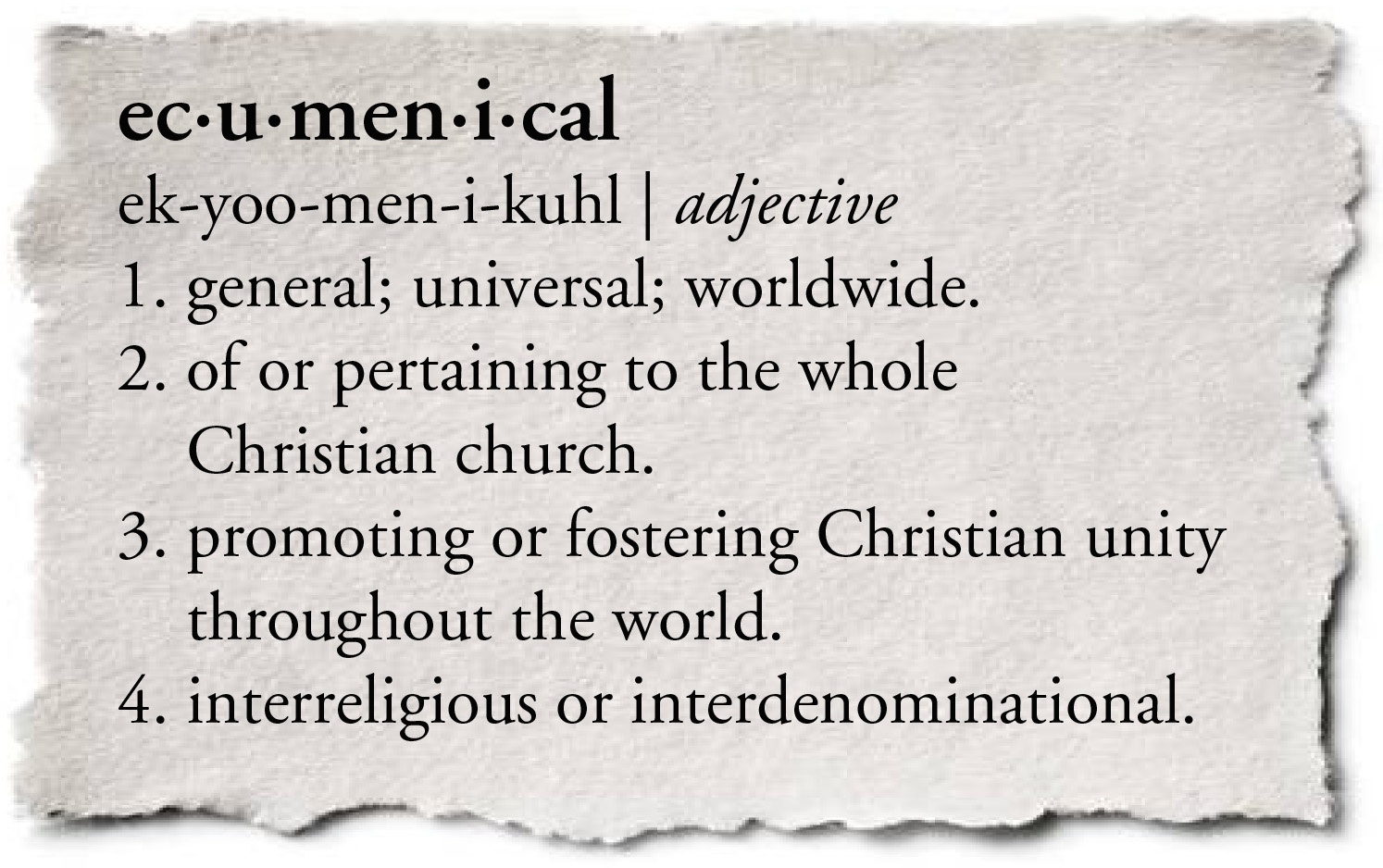
What have John and Promise displayed? I think they have shown a level of ecumenical illiteracy that has continued to plague the church in Nigeria, turning Christians into enemies when they are all called to witness to the world around them. We have continued to focus on what divides us rather than on the things that unite us. Maybe we need to talk more about ecumenical education so to learn from one another about the important things that should preoccupy our minds particularly in a time when the entire society is in dire need of our Christian witnessing. In a nation bedeviled by bad governance, breakdown of law and order, the corrosion of values, the restiveness of the youth as they battle with drug abuse, depression and joblessness, what are the Christian denominations in Nigeria, together, called to do? Are the churches called by God to engage in endless quarrel with one another, as well as contestation for power and territory? Or are the denominations in Nigeria, in spite of their differences, called to witness to the Gospel of love, of compassion, of grace and of peace in a nation that yearns to be redeemed in very concrete terms? It is high time we started asking the other important questions.
While it is important to raise questions that defend the unique identity of each ecclesial community, it is equally important to ask questions concerning the relationship of the diverse identities. Questions of our differences are as important as those of our relatedness. Both must be held together, even if in tension. The further isolated we are, the further we sink!

 Alongside One Another
Good admonitions. Danke Ikenna.
LikeLike
Thanks a lot Fr.
LikeLike
Thank you, for your Priestly witness.
LikeLike
Thanks a lot Roberta. God bless!
LikeLike