
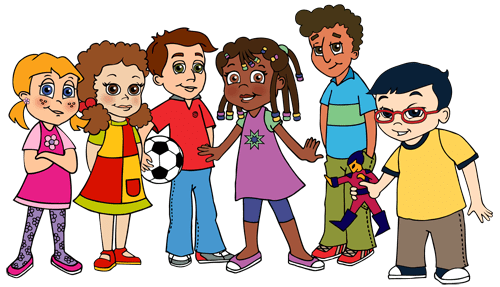
My dad was fairer than my mum. I mean in complexion. I and my siblings have no uniform complexions too, and each of us has a mind of his/her own. Yet, we have a common ground. We are family! That’s not all. In my extended family, we had three kitchens. Whenever we visit home during the festive periods, our little compound turned into a beautiful pond of kids of all sorts. By the way we paired ourselves, it was hard to distinguish our mothers sometimes. And you know what – we all had 3 by 3 round of meals. That’s the best part. It means that breakfast, lunch and dinner were served to all, from the three kitchens. Ask our mothers, they alone knew how they did that. And for our fathers, they ate together. They also argued together. That was in the humble village of Ndiokonkwo, but let’s move to Onitsha, and Urualla too.
Onitsha, the heart of Catholicism in southeastern Nigeria and the theatre of ecumenical tension between Catholics and Anglicans was my cradle. But I would later spend most of my childhood years in a remote town of Urualla. Urualla is significant in many ways, particular as it hosted the Catholic and local government centers of the entire Ideato region. The Catholic mission which arrived in the 1930s had dominated the entire area with schools and hospital to their credit. Anglicans within the vicinity were equally very visible. But there was little or no contact between them and Catholics at the communal level from what could be observed. In fact, there was equally no contact or collaboration between the minor seminaries of both ecclesial communities (Anglican St. Paul’s and Catholic Bonus Pastor) in the neighbouring Osina.
This absence of institutional ecumenical contact differed from my personal experience within my family while growing up. Revd. Canon Alfred Nwaizuzu, then pastor of St. Paul’s, and later (now retired) bishop of Ideato diocese of Anglican Communion, was a regular visitor to my home. He was a kinsman, and so always had a good time with my parents. Canon Nwaizuzu’s familiarity was no exception on the basis of being a kinsman. The Amaefule’s, our neighbours next door were also part of our lives. Despite being the only non-Catholics in our fairly large neighbourhood, we played and prayed together. We lived together as family and as believers. Our diverse destinations every Sunday morning mattered less. Mutual respect of our different communal identities was taken for granted. It was a norm.
Today the diversity in terms of Christian denominations has increased but unfortunately the tolerance among peoples seem to have faded the more. This is a sad development. If diversity is something beautiful why is it not being celebrated? And for those who argue that diversity is never good for us, I would ask if there were any point in time when we weren’t diverse. And if from Adam we have always been diverse, what prevents us from embracing it and working with it to promote a more united society? Bear in mind that diversity is not opposed to unity, and unity is never to be equated with uniformity.

 Alongside One Another
Nice read.
LikeLike
Bless you! Keep reading and keep sharing!
LikeLike
Nice one padre
LikeLike
Thanks a lot Cherish. Keep sharing!
LikeLike
Shunning diversity to me is tantamount to enthroning stagnation. Diversity makes the world go round. Celebrating our differences helps to unite and educate us,
Kudos Ikenna
LikeLike
Thanks a lot Chibugo. God bless you. Keep reading. Keep commenting and keep sharing.
LikeLike
Nice one Padre
LikeLike
Bless you Ezinne
LikeLike
Nicely written. Unity is our strength and diversity is our gifts. Above all, we are human beings first.
LikeLike
Thanks a lot Maximilian for putting it quite nicely. God bless you!
LikeLike
I love the narrative and pray we achieve the original unity in our diversity someday!
LikeLike
Thanks a lot Veronica. Let’s keep sharing the message and praying God to help us break down the walls of division and unnecessary hatred.
LikeLike