

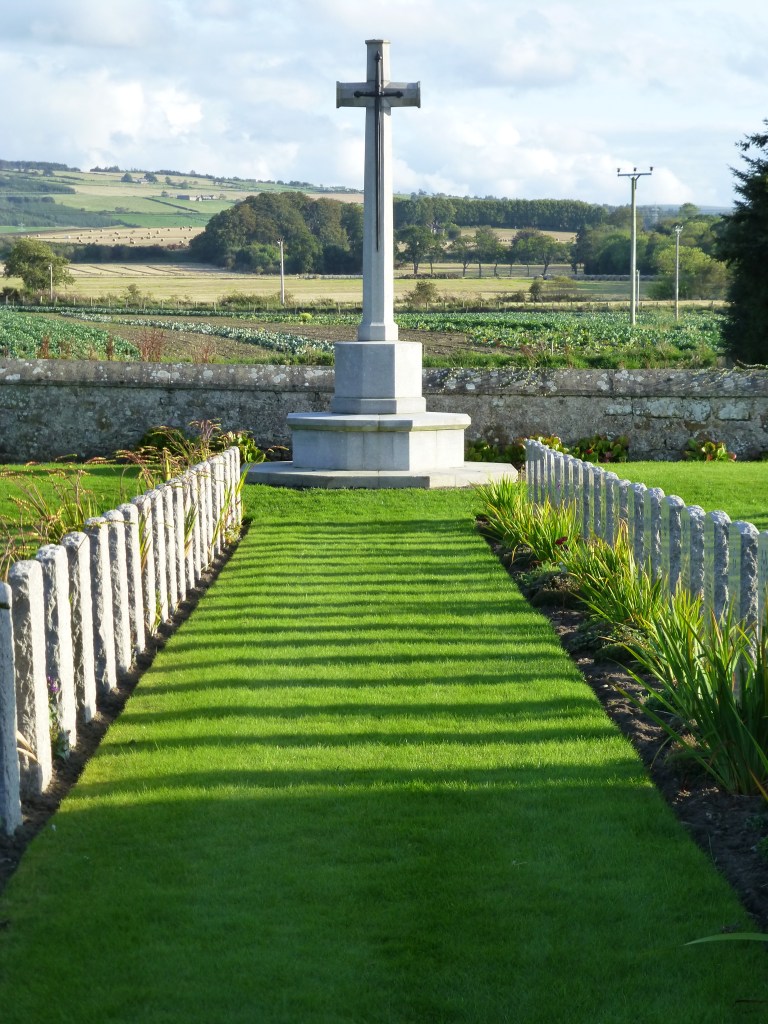
Early this month, a group of friends gathered for lunch in the quiet village of Boxberg, somewhere in Germany. As the conversation progressed, one of them narrated the story of a small community in Germany that had three graveyards (Friedhöfe): the first is for the Catholics, the second is for the Evangelische Kirche (Lutherans) and the third is for everyone. Interestingly, the first two are quite populated with beautifully maintained graves/gravestones, but the general or common graveyard has, after 10 years of its establishment, only two graves. Why? Why did the community even come to the resolution to set up this common graveyard? Is the common grave for non-believers? Is it for those who reject the division between the two churches?
It is interesting to see that it is possible to be divided even in death. In a related case, people even bear grudges till death or against the dead. We do not want to be buried alongside Christians of other denominations. Communal boundaries are erected even in death, down to the grave. Well, I do not know if it continues in the Kingdom of God. Will God keep Catholics in a separate mansion, the Evangelicals in another, and the Pentecostals in yet another mansion? Or will the streets differ in heaven – Catholic Boulevard, Lutheran Street, Anglican Drive, Pentecostal Lane? I’m still thinking. Shall we be demarcated by the colour of our heavenly garments – some snow white, others vanilla white, or in cloud white or ceramic white? I wonder if any of these make any sense, at all.
Perhaps, I am very much mistaken. Perhaps, the reason for the graveyards’ statistics is not about division. It may be about satisfying the desire to stay with one’s loved ones, members of one’s faith community or one’s family. From the part of the world I come from, it is always a great desire to lie in death next to one’s forefathers. It was one of the things that made the Catholic priesthood seem so awkward, since one would have to be buried somewhere else (in the church cemetery) rather than in one’s ancestral home. Yet, to be buried in the cemetery for the diocesan clergy is in another way to be buried alongside one’s co-workers in the Lord’s vineyard. The ultimate aim is to rest in peace alongside others with whom one had hitherto shared some peace.
In all, the near-empty cemetery in that German community speaks more even in its silence. It speaks in a paradoxical manner. It speaks of either love or division. Either of the answers is fine until we find out the correct answer from those who chose the spot to bury the dead or from the dead who decided where to be buried. I hope the reason is as a result of love. And I pray that we may not be divided even in death. For those of us who are still alive, may we come closer to one another, live together with each other, reconsider the thickness of some boundaries, and adjust our distances.

 Alongside One Another
This is too good Fada Nwannem. We must live in peace and when we die, may we not be divided by death. We have to work assiduously to break the walls that foster these divisions among Christ’s faithful. Thanks Nwannem for this.
LikeLike
Thanks a lot Peter for the nice comment and for appreciating the write-up. Keep sharing and preaching peace and unity. God bless!
LikeLike
Thanks for this piece. I look beyond these analogies to the real intent of the script. When division is taken too far, it could stall a blissful eternity. While identification with faith-based group, coworkers, community etc is vital, one should look beyond these defferentions to what unites us. Along side with one another in peace is truly the best option.
LikeLike
Thank you very much Anthony. Your analysis of the underlying intention of the text is very apt. Let’s keep pushing the narrative that our differences should not be interpreted as a reason for bitter division, but as a strength to a better and united (even in a differentiated form) community.
LikeLike
A very good write up
LikeLike
Bless you!
LikeLike