
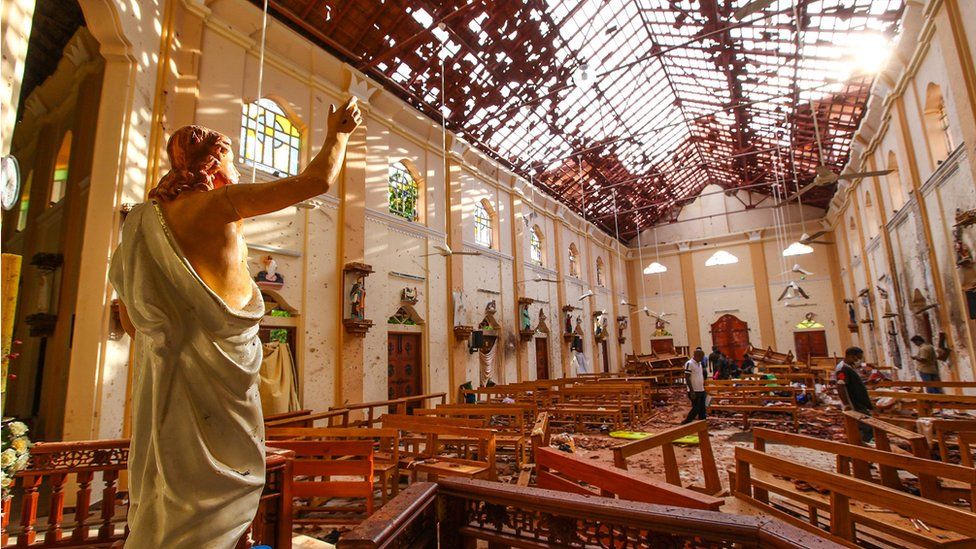
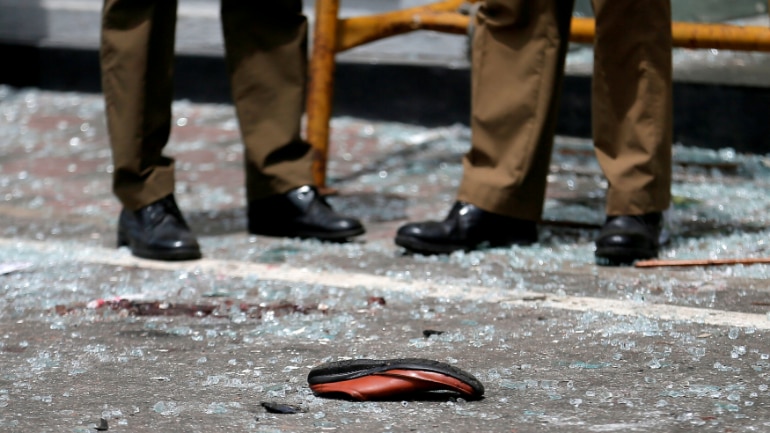
On Easter Sunday, 21stApril 2019, 8 coordinated terrorist attacks took place in 3 churches and 2 hotels in Sri Lanka, killing many Christians and visitors. As a result, about 290 people died and over 500 injured. The sight of the remains of kids who had come to church on that fateful Easter Sunday for their First Holy Communion but ended up dead was very unsettling. Of all the reactions, particularly on Twitter, from some prominent American politicians, such as Barack Obama, Elizabeth Warren, Julián Castro and Hilary Clinton, Christians who were main victims of the attacks were simply referred to as ‘Easter worshippers’. Really?
What is the meaning of ‘Easter worshippers’? This is perhaps the first time I ever heard of that expression. Maybe Christians would best be identified with any particular feast they are celebrating: ‘Christmas worshippers’, ‘Good Friday worshippers’, ‘Pentecost worshippers’. Could it be that these individuals are intent on suppressing the ‘Christian identity’ as a way being politically correct? What was perhaps very interesting is that the same individuals were very quick to mention ‘Muslim’ in their goodwill messages during the March 15 2019 attack in New Zealand. But interestingly, Muslim leaders such as Imam Mohamad Tawhidi, who commiserated with Christians did not hesitate to refer to the victims as ‘our Christian brothers and sisters’.
Religious communal identity must be taken seriously if we are to promote peace, tolerance and co-existence in our society. Our identities are not something to be suppressed but to be celebrated. Theology should be at the forefront of promoting identity and difference since both are entangled. It must avoid any tendency to listen to the political left in its power play that only serves their temporal interest. These interests are such that do not consider the long-term effect of their twisted narratives. The perceived suppression of the ‘Christian’ identity is based on the presupposition that Christians are not prone to violence, and that Christianity is now terribly weakened (particularly in the Western world) that no one really cares about Christian identity. Such an unfortunate reasoning equally considers a sympathetic attitude towards Muslims as incompatible with a similar attitude towards Christians. Hence, the fallout is that Christians are increasingly excluded in the general discourse and eventually creating an imbalance in the society in the future.
Of course, the idea is to avoid falling into the polarity of the ‘left’ versus the ‘right’, liberals versus conservatives. No! This is because there could sometimes be good arguments coming from both sides. A good theology would only do the job of discerning the better perspective in the light of the Gospel. It has to be the Gospel that holds the tension of putting the light on (rather than under) the bushel as well as love for neighbour irrespective of who he or she is. Until we are ready to live with this tension, then politicians will always be manipulating their way through the entire chaos. Sadly, they don’t care if the chaos includes the 290 that were murdered on that Easter morning.
As we mark the one-year anniversary of Sri-Lanka Easter morning massacre, we pray for peace, tolerance, and love. Ozoemezina!

 Alongside One Another
Nice piece Fr. Amen!
Ozoemezina!!
And may the souls of all those who departed rest in peace..amen.
LikeLike
Thanks a lot Chinelo for reading. I say ‘Amen!’ to your prayer.
LikeLike
It is quite unfortunate that issues of identity and religious have become fertile instrument for the political community who often use them to advance whatever their interest could be at the detriment of what ought to be the core value of humanity. To this, one may ask, “which way humanity?”. Every response, even the most seemly authentic answer appears to sit on particular interest, so come to be treated as opinion. But until we accept that every opinion should be regarded, alongsideoneanother (along side one another) becomes difficult, since the “other” is always perceived “a threat” to some existence. But in all due respect, along side one another gives meaning to the “I” in the contest of “US”.
LikeLike
Thank you Chimaobi for the comment. I couldn’t have said it better. Your commendation is well appreciated too. God bless and spread the word!
LikeLike
A really thought-provoking piece.
Thank you.🙏🏾👍🏾
LikeLike
Thanks a lot Kachi. Keep sharing.
LikeLike
Nicely written on the 1st anniversary of the Sri Lanka Christians particularly referred to as “Easter worshippers” by few “political correct” persons. No defamation has been able to erase that Christian identity which does not denigrate a person’s acclaimed political class by acknowledging specific faith identity.
LikeLike
Thanks a lot Max for your kind comment.
LikeLike
When we apply love, barriers of politics and religion are broken.
LikeLike
When we apply love alongside one another, the barriers of politics and religion are broken.
LikeLike
Thanks a lot John for the comment.
LikeLike
A really thought-provoking piece.
Thank you 🙏🏾👍🏾
LikeLike